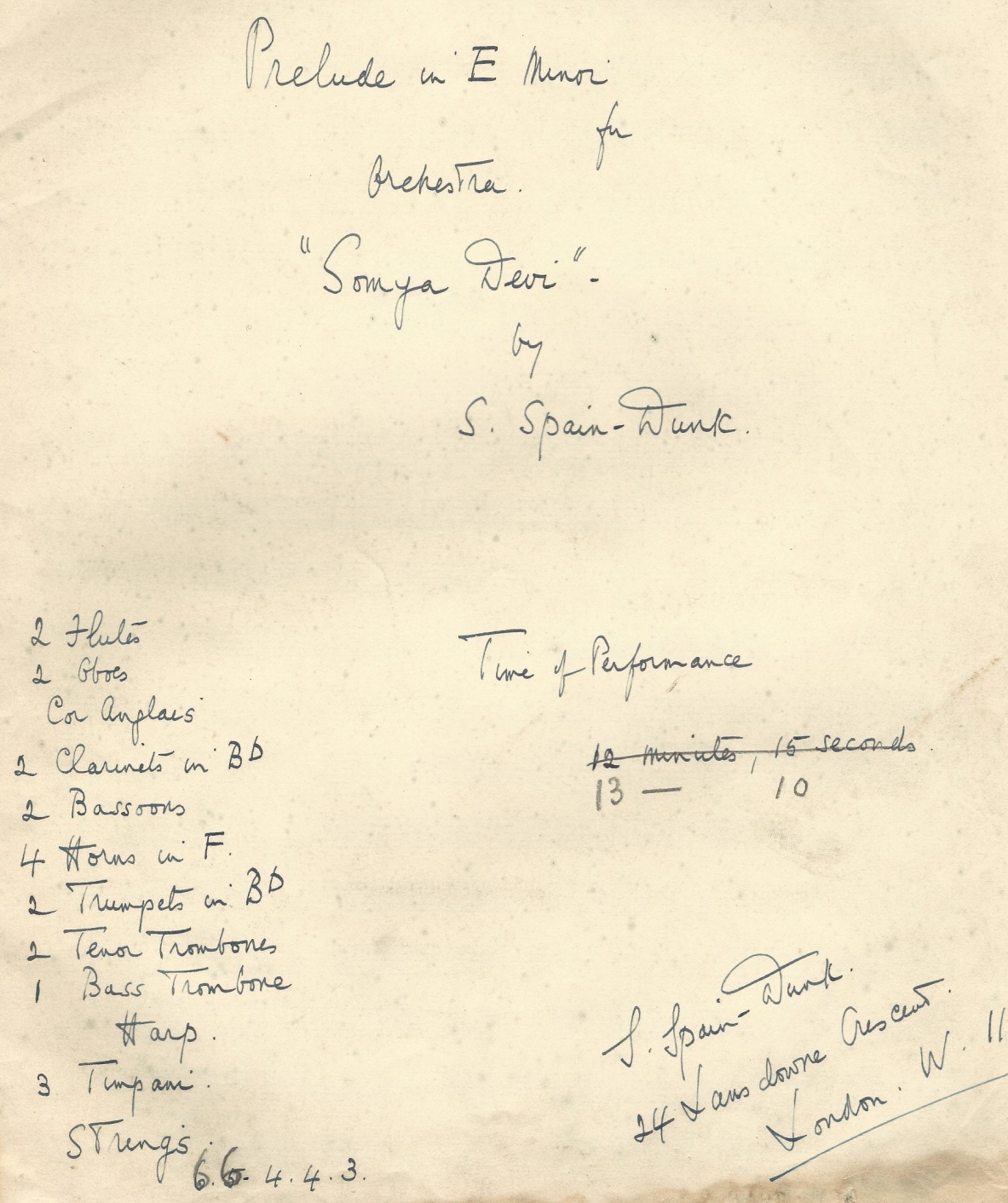
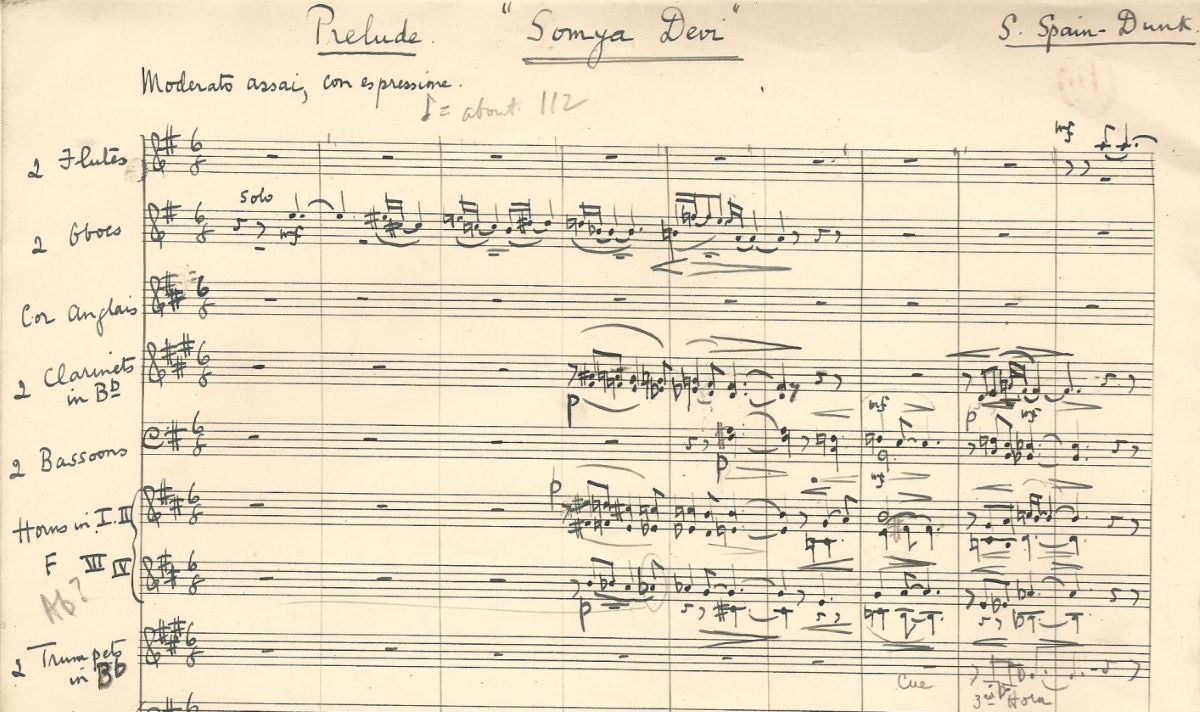
Somya Devi (Blessed Somya)
A second orchestral tone poem influenced by Hindu religious ideas (after The Flute Player of Brindavan) was written by Susan in Clapham, London in 1940. Somya Devi was the Sanskrit pseudonym of an English yogi friend whose religious views, based on the teaching of the Bhagavad Gita, helped her at this anxious time.
This Prelude is a complex work, sad and introspective, but also reassuring. Its various themes make sense if we take them to symbolise some of the assuring principles of Hindu scripture of the Gita, as well as a portrait of Somya.
The Gita opens with the lament of a young Prince, Arjuna, on the eve of battle. He complains to Krishna that it seems wrong to make war with his kinsmen. Krishna says that as Ajura belongs to a warrior caste, destiny requires him to do his duty as a soldier. Death is but a prelude to rebirth. By the yoga discipline of seeking enlightenment and acting rightly, the soul will be purified for ultimate bliss.
Susan’s son Alan, an Anglican clergyman, felt that if the themes of this tone poem are read as symbols of Gita teaching, as a message of comfort in the war situation of 1940, the Prelude becomes highly meaningful and might be reckoned as Susan’s best work.
She finished the score in 1940 but could not prepare the parts until after the Second World War. It had some broadcasts in the 1950s and she made a recording of one of these, of which some extracts survive. Perhaps somewhere in the BBC sound archives a recording of Somya Devi may still exist.
The score and parts for Somya Devi have been transcribed and edited by Peter Cigleris from Susan’s original manuscript, so it is available for modern performances and recordings.